Congress may be in August recess, but lawmakers will soon return to Washington with a long list of unfinished business and little time to complete it. Government funding tops the agenda, but it is far from the only major item facing Congress before the fiscal year ends. Surface transportation reauthorization, the annual defense bill, water infrastructure legislation, and several expiring federal programs could all compete for floor time this fall.
The most immediate deadline is government funding, which will expire on September 30. The House already passed a funding extension referred to as a “continuing resolution” through December 4, while the Senate overwhelmingly approved a different package that would keep the government funded through December 11. The House will have to decide whether to accept the Senate package or negotiate further when lawmakers return. Even if Congress avoids a September shutdown, lawmakers will still need to provide full-year funding for 2027 or enact another funding extension before the December deadline.
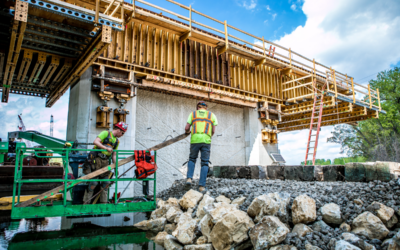
The Infrastructure Investment and Jobs Act’s (IIJA) surface transportation authorities also expire on September 30. The bipartisan BUILD America 250 Act, a proposed 5-year bill for transportation funding, cleared the House Transportation and Infrastructure Committee by a 62-2 vote in May but has not yet reached the House floor for a vote. The Senate continues to work on its own legislation. The Senate-passed government funding package would temporarily extend most—but not all—federal highway, transit and related transportation programs. A short-term extension may prevent an immediate interruption in highway and transit funding, but it is no substitute for a new, long-term federal highway bill. Any delay in long-term funding for transportation creates uncertainty about future projects. AGC of America is taking action through its America’s Moving Forward campaign, advocating for passage of a long-term highway and transportation bill. AGC members should support the America’s Moving Forward campaign and urge Congress to complete a long-term surface transportation bill quickly.
Congress also must complete the 2027 National Defense Authorization Act (NDAA), one of the few major bills that Congress has enacted annually for decades. The House passed its version in July, but the Senate’s efforts to bring its bill to the floor stalled before the August recess. Before a final bill can be sent to the president’s desk, Congress will need to resolve significant differences between the House and Senate versions. Beyond defense policy, the NDAA remains an important vehicle for military construction, labor, procurement, and other provisions of importance to contractors.
Several other large authorization measures also await congressional consideration. Congress will be looking to complete the Water Resources Development Act of 2026 (WRDA), which authorizes Army Corps of Engineers projects involving ports, inland waterways, flood protection, and other water infrastructure. The House Transportation and Infrastructure Committee and the Senate Environment and Public Works Committee both unanimously approved separate WRDA bills in July, creating one of the more promising bipartisan opportunities for the fall.
Taken together, the fall calendar leaves Congress with a familiar challenge: a crowded legislative agenda and very few days to act. Government funding will take priority, but the decisions Congress makes on surface transportation, water infrastructure, and other long-term authorizations will determine whether contractors enter 2027 with predictable federal investments or face another round of short-term extensions.
For more information, please contact Deniz Mustafa.