
Trump Administration Moves Forward with Restrictions on Foreign-Made Drones
The Federal Communications Commission (FCC) is taking another step toward restricting foreign-made drones in the United States—a development that could have significant implications for construction companies that rely on drones for surveying, inspections, mapping and project documentation.
The FCC has proposed prohibiting the future importation and sale of certain foreign-manufactured drones that previously received federal equipment authorization. The proposal focuses on drones equipped with capabilities the federal government considers potentially “military-grade,” including LiDAR, thermal imaging, automated docking, heavy-lift operations, agricultural spraying and coordinated or swarm flight.
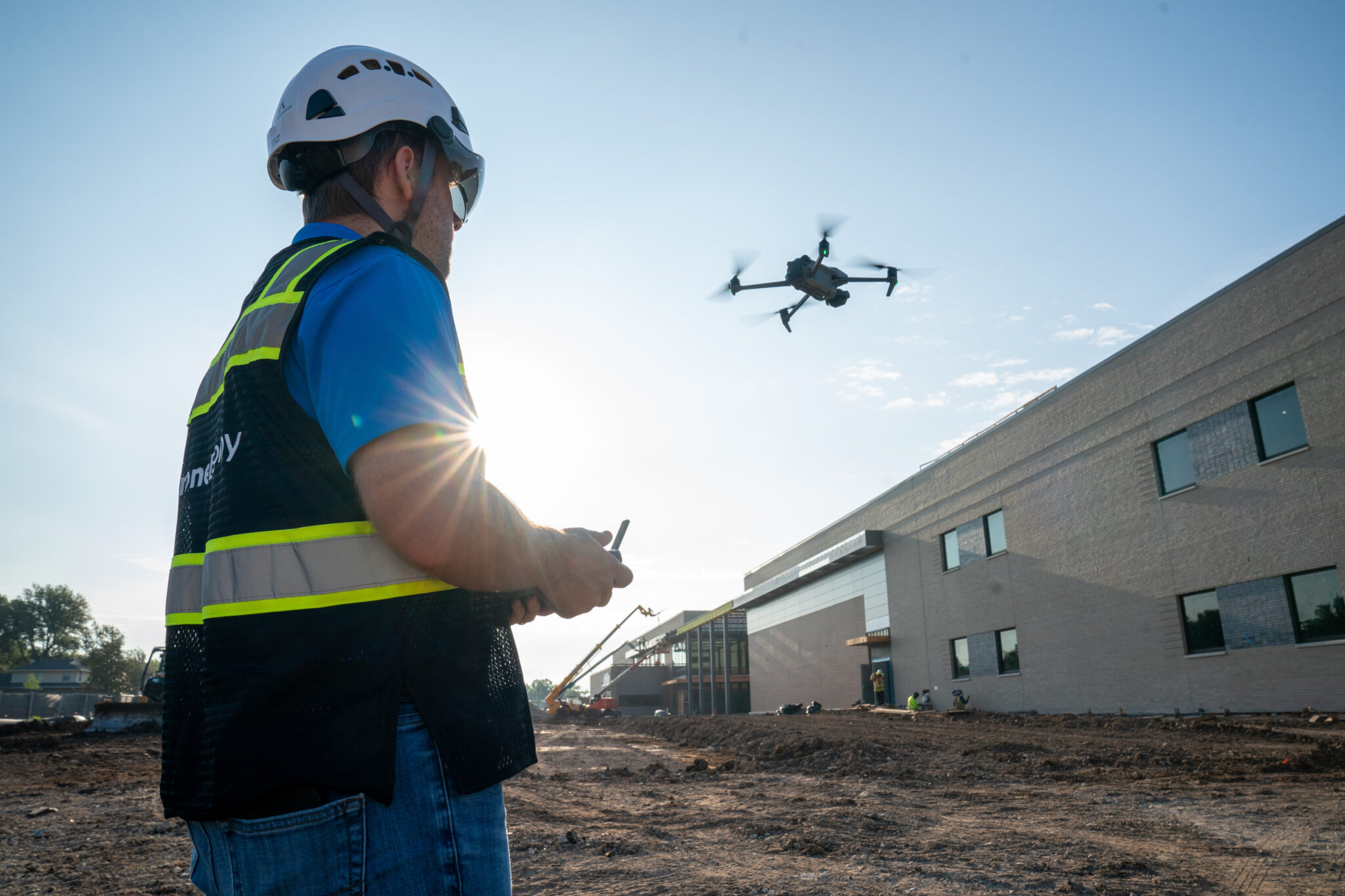
Many of these capabilities are also routinely used for legitimate commercial purposes. Within the construction industry, drones equipped with LiDAR and thermal cameras can help contractors survey difficult terrain, create detailed site models, inspect roofs and building envelopes, monitor project progress and identify potential safety or maintenance concerns.
How the Proposal Expands Existing Restrictions
In December 2025, the FCC added foreign-made drones and certain critical components to its Covered List. Equipment placed on this list generally cannot receive new FCC authorization, which is necessary before radio-frequency devices can be legally imported, marketed or sold in the United States.
That initial action primarily affected new drone models that had not already received authorization. Previously approved models could generally continue to be imported and sold. The FCC’s latest proposal could close that gap by preventing the future importation and marketing of certain previously authorized foreign-made drones when they include designated advanced capabilities.
If the proposal is finalized, the new restrictions are expected to take effect after a transition period. Contractors could therefore see changes in product availability, purchasing options and long-term support for some commonly used commercial drone systems.
What This Means for Existing Drones
The proposal does not appear to prohibit contractors from continuing to operate foreign-made drones they already own. It is focused primarily on future importation and sales rather than possession or operation of existing equipment.
However, the policy could still affect owners over time. Reduced availability of replacement aircraft, batteries, controllers, sensors and other components could make it more difficult or expensive to maintain existing drone fleets. Contractors may also have fewer choices when expanding or replacing their equipment.
The practical effects will depend on the final language adopted by the FCC, including which technologies and models are covered, what exemptions are created and how the agency handles replacement parts and accessories.
Potential Effects on Construction Operations
Drones have become valuable tools for general contractors, specialty contractors, engineers and surveyors. They can collect information more quickly than traditional methods while reducing the need for workers to enter hazardous or difficult-to-reach areas.
Construction firms commonly use drones for:
-Topographic surveys and site mapping
-Earthwork and stockpile measurements
-Progress photography and project documentation
-Roof, façade and structural inspections
-Thermal and energy-efficiency assessments
-LiDAR scanning and three-dimensional modeling
-Safety monitoring and quality-control inspections
Restrictions affecting these systems could require companies to reevaluate their equipment plans, approved vendors and technology budgets. Domestic or federally approved alternatives may be available, but replacing an established drone program can involve more than purchasing new aircraft. Companies may also need to consider software compatibility, employee training, data-management systems, warranties and sensor performance.
Steps Contractors Can Take Now
Because the FCC’s action remains a proposal, construction companies do not necessarily need to replace their current equipment immediately. They should, however, begin reviewing their drone programs and preparing for possible changes.
Contractors that use drones may want to inventory their current aircraft, sensors and essential replacement components; identify the country of origin for their equipment; speak with vendors about future availability and support; and evaluate alternative systems that meet their operational requirements.
Companies pursuing federal contracts should also review the procurement requirements attached to those projects. Federal purchasing restrictions and contract-specific cybersecurity provisions may differ from the FCC’s rules governing equipment authorization and commercial sales.
AGC of America continues to monitor the proposal and its possible effects on contractors. AGC East Tennessee will share additional information as the FCC completes its review and releases further guidance.
This article is based on reporting from AGC of America and publicly available information regarding the FCC’s restrictions on foreign-made unmanned aircraft systems.